Goldenrod: Weed or wool dye?
Fall around here just smells different.
Finally, after weeks of waiting, the air is starting to cool off. Summer’s miserable, relentless heat is grudgingly backing down, and mornings are beginning to feel like something you want to step outside for.
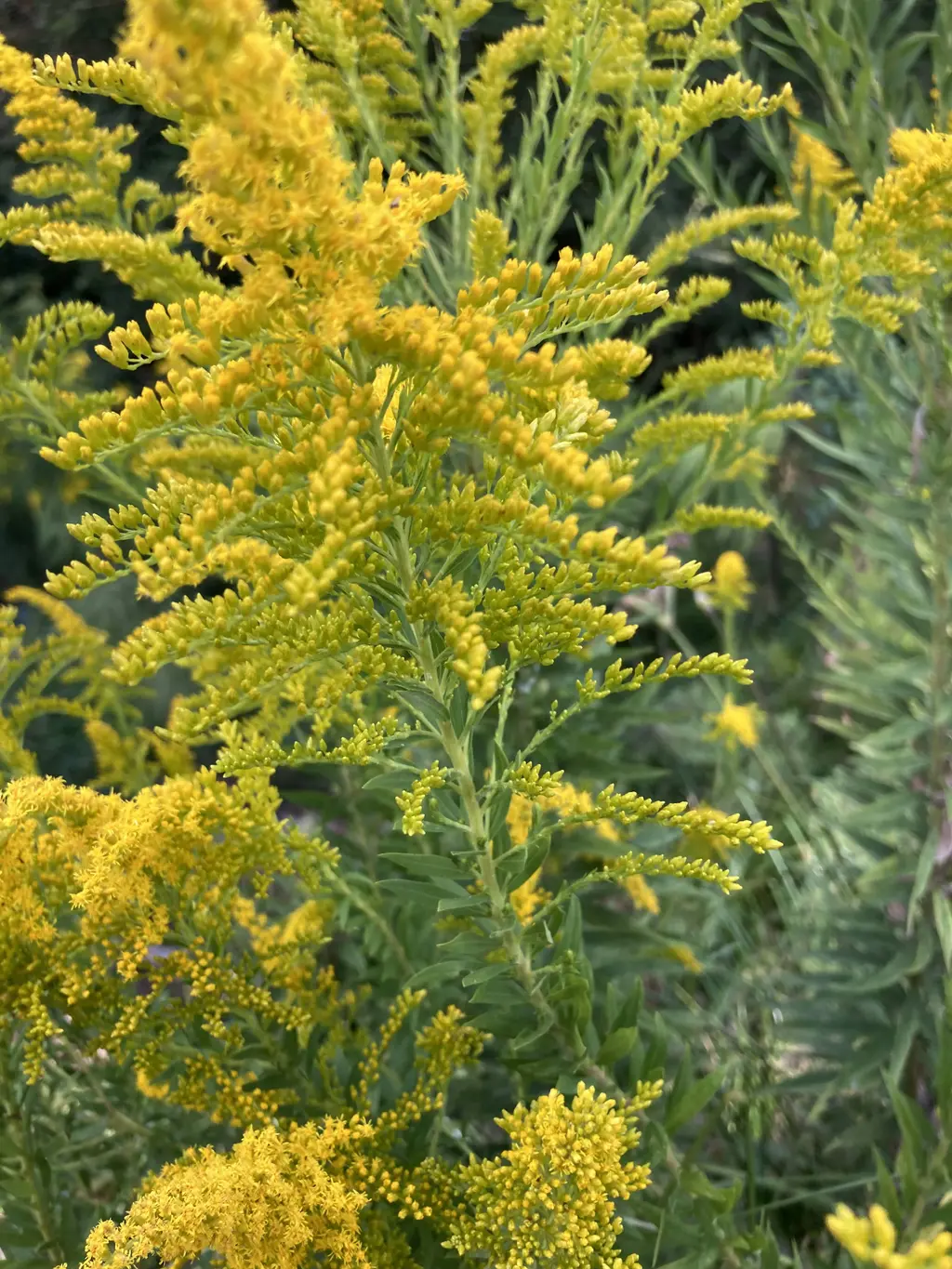
Out in the back acreage, the golden spikes are popping up everywhere. It’s goldenrod season.
Goldenrod is good for a lot more than looking pretty in a ditch or along a fence line. You can use it for teas, tinctures, and mocktails, but there is one use that it performs here more than others. Goldenrod as a natural dye.
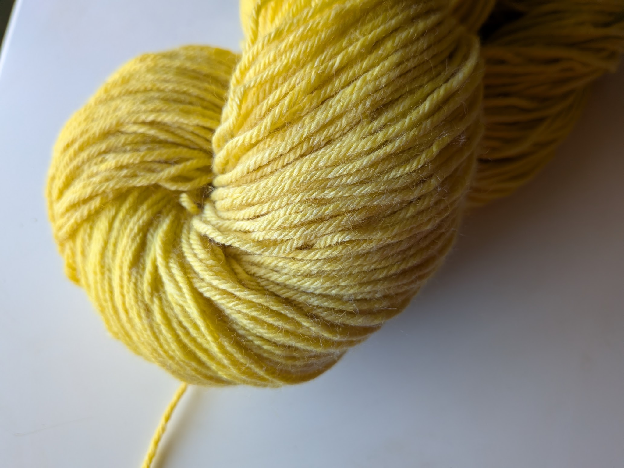
Let me tip you off to a little botanical badassery: goldenrod dyes white yarn a gorgeous, vivid yellow - a little bit of sunshine pulled straight out of the ground. For a plant that shows up just as summer is packing its bags, that yellow always reminds me of long, hot days.
Goldenrod grows wild around here, and it gets a bad rap for causing seasonal allergies. Turns out, much of that sneezing and nasal mayhem is caused by its evil cousin, ragweed. The two tend to grow in the same places, but ragweed releases lightweight pollen that rides the wind, while goldenrod’s heavier, sticky pollen mostly hitches a ride on insects. So goldenrod is out here catching strays and getting blamed for a crime it probably didn’t commit. It is even used by some herbalists in remedies intended to ease seasonal allergy symptoms (the very same allergies it has been blamed for). Whether it actually helps is another story for another day with another person, but not me.
At Punk N Poultry, we don’t usually turn to goldenrod for seasonal allergy relief (we prefer a lovely mix of Fire Cider and antihistamine tablets). Instead, I put those long, flower-covered stems to work in my knitting and fiber projects. In September through October, we gather tons of the stuff to use as natural dyes for yarn.
I love natural dyes in all their unpredictable glory, but a lot of plant-based dyes yield softer, more muted shades. Think tea-stained tans, dusty pinks from avocado pits, and earthy browns from acorns. Goldenrod, though, produces a bright, unapologetic yellow that screams “PAY ATTENTION TO ME.” (Which, funnily enough, is a refrain my husband hears from me ALL. THE. DAMN. TIME.)
So whether goldenrod is a weed or liquid gold, we’re not splitting hairs. It’s useful, requires zero effort, and is about as cheap as it gets: free.
I may put a lot of work into making our garden beds look pretty, but some of the best things on our land grow wherever the hell they please.
How to dye yarn with Goldenrod #
Ingredients #
- Goldenrod
- Large, non-corrosive pot
- Alum (mordant)
- Cream of tartar (mordant)
- Clean water
- Yarn/cloth to dye.
- If using yarn, it’s best to use yarns that are more resistant to felting, such as superwash merino. If you decide to use some other wool yarn, you must be very gentle to avoid felting.
- Both Alum and Cream of Tartar can be found in the spices and/or baking aisle of most grocery stores.
Instructions #
- Gather goldenrod when it is at its brightest. Bundle and set to the side.
- In your pot, dissolve alum and cream of tartar in hot water and stir.
- Pre-wet your yarn or cloth with lukewarm water, then gently add to the pot of dissolved mordants. Try not to agitate the yarn too much, because there is less chance of felting.
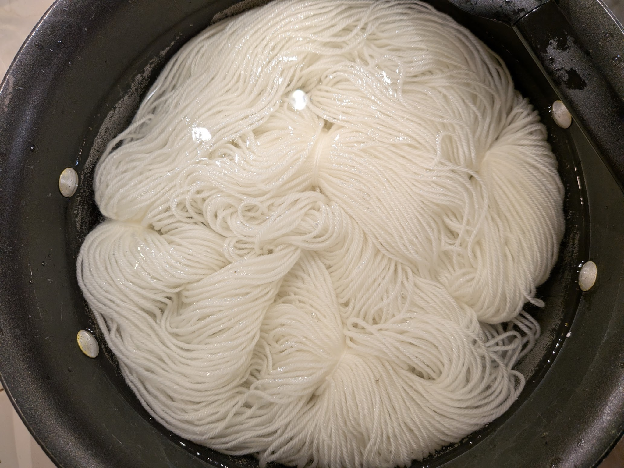
- Turn on low heat and let simmer gently for about 40-60 minutes.
- Remove yarn/cloth from the mordant and let it cool. Pour out mordant and rinse the pot.
- Fill the pot with clean water and submerge goldenrod flowers.
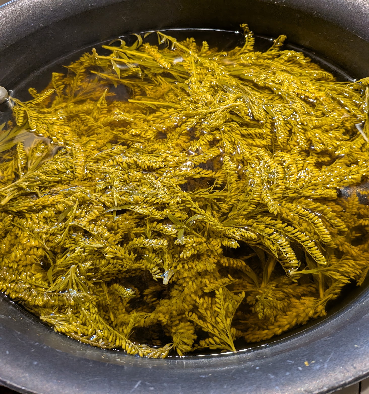
- Bring the pot to a gentle simmer (around 176°F–190°F / 80°C–88°C) for 1 to 2 hours. Do not boil. High heat can turn the dye muddy or brownish.
- Strain out the plant material using a mesh strainer or paint strainer, saving the golden-yellow liquid.
- Warm the strained dye liquid back up to a gentle simmer.
-
Submerge your wet, pre-mordanted wool yarn into the dye liquid, being careful not to agitate too much.
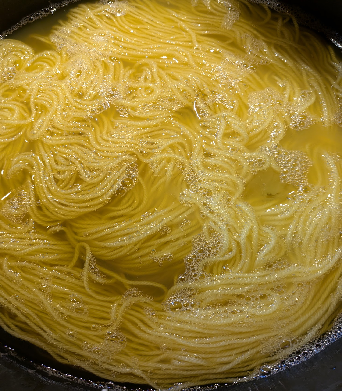
- Simmer gently for 45 to 60 minutes (or let it steep and sit in the bath overnight for a deeper, more saturated color).
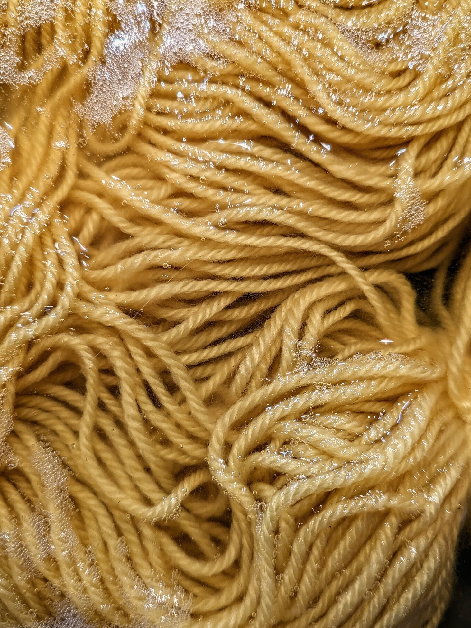
- Remove from the dye bath and let the yarn/cloth cool. Rinse gently in lukewarm water and hang to dry thoroughly.