Passion Fruit Didn’t Quit and Neither Did We
Here in Texas, we can grow a lot of things. With our subtropical climate, we’ve got watermelon, figs, pomegranates, citrus, peaches, blackberries, strawberries - you name it. We have even gotten away with a few low-chill apples (like Anna and Carnavale) and Barbados cherries.
But my favorites, the ones that make me check every online nursery “just to look”, are the tropicals, like mango, pineapple, or soursop.
Or passion fruit.
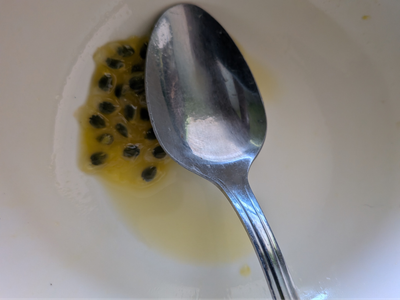
Hell yes, passion fruit! There’s just something about it I love. Sweet, tart, floral, citrusy, with that satisfying little crunch from the seeds. Nature even packaged it in a single-serving cup for people like me who hate washing dishes. Cut the top off, grab a spoon, and you’re in business.
But growing passion fruit isn’t as effortless as the internet and a lot of the gardening blogs would have you believe. We learned that the hard way.
Our First Attempt #
Our first attempt was back in 2016 when we discovered maypops (Passiflora incarnata) growing wild on our property.
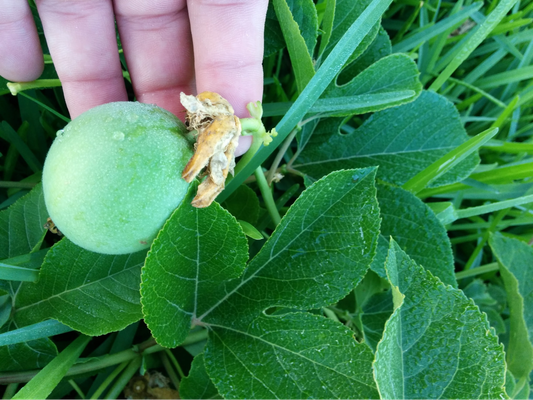
We’d already found dewberries covering parts of the farm, and after spending a few weeks with permanently purple fingers, our expectations were pretty high. Unfortunately, the maypops didn’t care at all about our expectations.
The fruit never seemed to ripen before disappearing, most likely thanks to whatever wildlife was getting there before we did. We took cuttings, dipped them in rooting hormone, and crossed our fingers, but got nothing in return.
The wild maypops won that round. But I wasn’t ready to give up.
Buying Cuttings #
By 2022, I was ready to try again.
This time I ordered cuttings off Etsy of a self-fertile passion fruit cultivar (Passiflora edulis). By then I’d rooted plenty of plants successfully, so I figured this wouldn’t be much different. I started some in water and some in soil and I babied them for months.
They all died.
Passiflora: 2. Us: 0.
Another Go #
Late May 2024 rolled around and, being both stubborn and motivated by dessert recipes, I decided to throw money at the problem. This time I cut out the bullshit and bought two healthy plants from an online nursery.
We planted each one in a large pot beneath an arch we’d built from a cattle panel. They climbed beautifully all summer. We had healthy vines and gorgeous leaves. Green, lush and overflowing. Know what we got in return for all of the weeding, watering and bug-picking? Not a single flower and not a single fruit.
Winter was coming, and after the unusual cold snaps we’d had the past few years, we knew those vines weren’t going to make it on their own. So we wrapped the plants in sheets and plastic, tucked everything in as best we could, and hoped for the best.
Best in this instance clearly meant letting the wind peel everything off like our kids opening Christmas presents. One of the coldest freezes we’ve had in years finished the job.
Back to square one. Again.
One More Chance #
Luckily, the same nursery I’d ordered from during our last epic failure put their plants on sale and I ordered two more.
We used the same pots and same cattle-panel arch because either: a.) we got big swingin’, low hangers and that’s how we roll, or b.) we are too cheap and need to DIY this experiment. I’ll let you decide how to justify it.
What we did have was a different, hopefully better, plan.
Instead of trying to protect full-grown vines through winter, we’d let them grow until late fall, cut them back to about a foot above the soil, and move the pots inside before the hard freezes arrived. It wasn’t a pretty solution, and it damn sure wasn’t ideal. Nothing fancy, just a sunny spot in the house and a little patience.
And for the first time, it worked. By March 2026, the vines were healthy, green, and ready to go back outside.
Finally, Fruit #
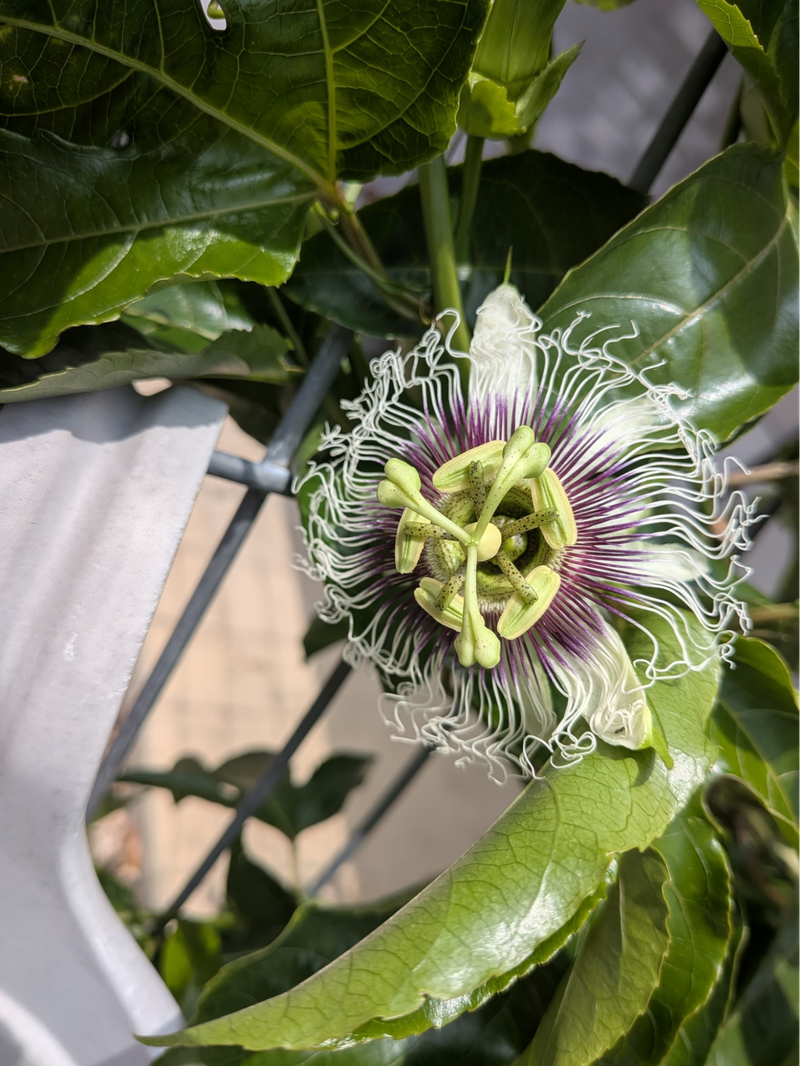
Watching those first flowers open felt like winning an argument with Mother Nature. I’d almost die a little inside at the first signs of a flower wilting. People, I was STRESSED. But they were so pretty, I took tons of pictures of them. (Passion flowers are ridiculous in the best possible way. They look gorgeous but a little alien. They rival pineapple guava in looking like a fireworks display.)
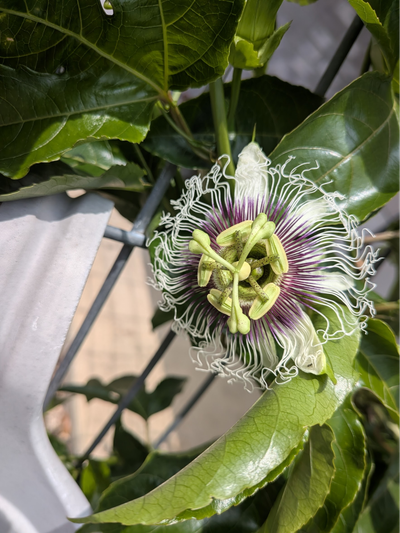
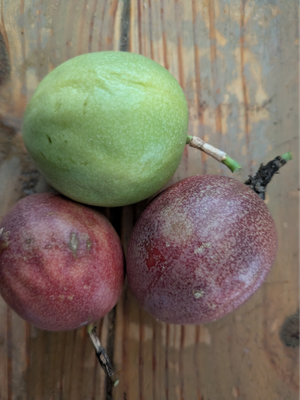
Every bloom I saw got a little fondling from me. But not in that way, you dirty mind. Whenever I spotted one, I’d hand-pollinate it by gently moving pollen between the anthers and the stigma, hoping this would finally be the year. And y’all, it was. By May 2026, we were harvesting our first homegrown passion fruit.
After years of failed cuttings, frozen vines, and more optimism than common sense, we finally got there. And when I grab one in the morning with yogurt and my coffee, I know they are absolutely worth the trouble.
Our New Routine #
So this is the system now. Every fall we’ll cut the vines back. Then before the first hard freeze, the pots come inside. They’ll spend the winter in a sunny spot in the house while everything outside decides whether it’s going to be winter or not. Then when spring finally comes, they’ll head back out to the cattle-panel arch and start climbing all over again.
Passion fruit is generally considered hardy enough for our area in 9b, but the last several winters have reminded us that “generally” doesn’t always mean “this year.”
I’m a little proud of us that we didn’t just give up and grow blueberries, which everyone tells us would have been considerably easier. It was tempting, but we’re much too stubborn to let a few years of pain get in the way of a good breakfast.
We proved that sometimes, before you consider changing the plant, just try changing the plan.